Is Camtasia Worth It in 2026? An Honest Answer
Vorec Team · 2026-09-12 · 7 min read
Two questions get asked about Camtasia more than any others: why is it so expensive, and is it hard to learn. Both became more pointed after TechSmith retired perpetual licences in Fall 2024 and moved everyone to annual subscriptions.
This is an honest answer to both, including the cases where Camtasia is still clearly the right purchase.
The 30-Second Verdict
- Worth it if you make screen tutorials regularly, need zoom/callouts/quizzing, and one or two people will own the tool.
- Not worth it if you make a handful of videos a year, only need trimming, or nobody will invest a weekend in learning an editor.
- Worth reconsidering if the reason you are asking is that the renewal appeared and the perpetual licence you expected did not.
What It Actually Costs Now
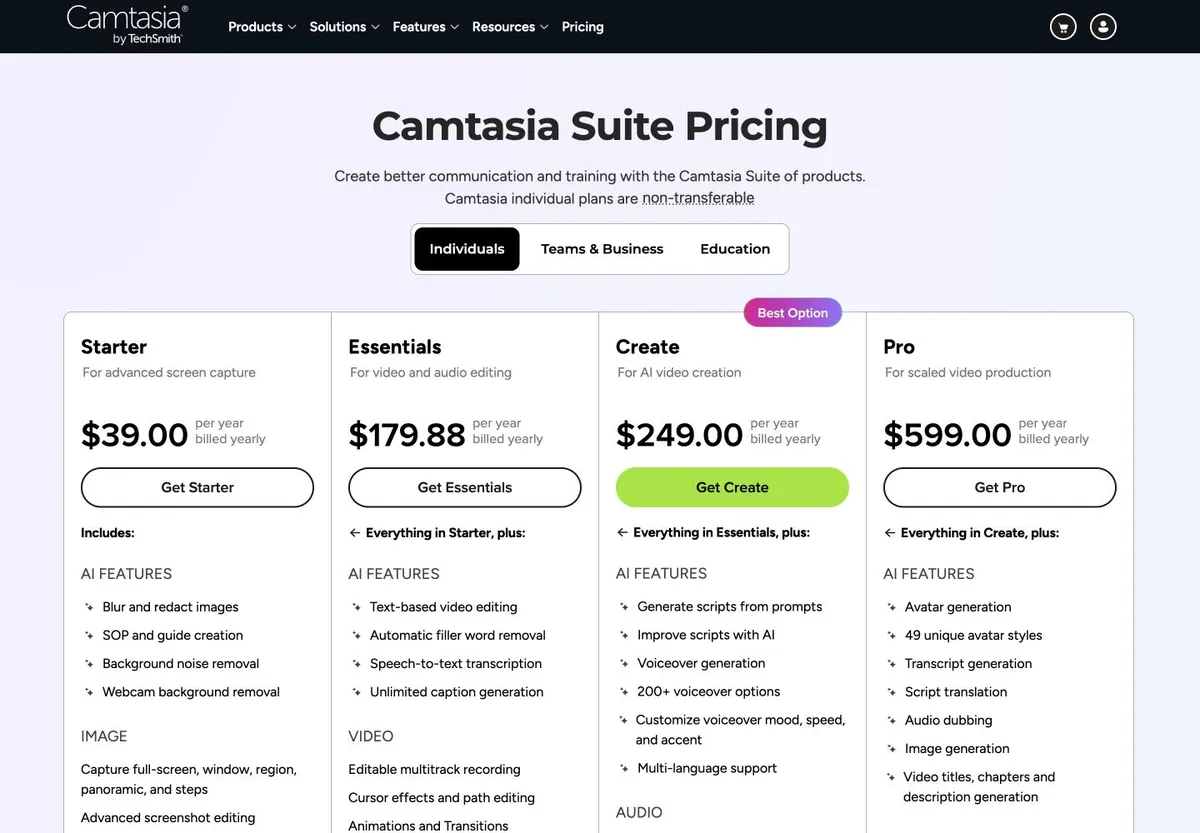
| Plan | Price | Aimed at |
|---|---|---|
| Starter | $39/yr | Advanced screen capture |
| Essentials | $179.88/yr | Video and audio editing |
| Create | $249/yr | AI-assisted video creation |
| Pro | $599/yr | Scaled video production |
| Teams & Business | See current team pricing | Transferable team licensing |
The change that upset people: perpetual licences ended in Fall 2024. The final upgrade-priced perpetual purchases closed on 1 October 2024. Existing holders are grandfathered on the version they own — it keeps working — but it will not get new features, and every new seat is a subscription.
That is the whole "why is Camtasia so expensive" story. The price per year did not necessarily jump; the shape changed. A tool you used to buy once every three years now renews annually, and the tiering means the features many people assume are "Camtasia" sit above the $39 entry plan.
Starter includes a watermarked editor; watermark-free editing starts at Essentials. Prices checked 12 September 2026. Camtasia figures are US individual annual prices; Starter includes a watermarked editor. Essentials and above provide watermark-free editing. Team and regional prices differ. TechSmith pricing.
Is It Hard to Learn?
Honestly: it is a real video editor, so there is a real learning curve — but it is one of the gentler ones in that category.
Easy within an hour: recording, trimming, basic transitions, exporting.
Takes a weekend: zoom-and-pan that feels deliberate rather than seasick, callouts that match your brand, audio cleanup, working with multiple tracks.
Takes genuine practice: quizzing and LMS output, templates and reusable assets, consistent pacing across a series.
The people who find it painful are usually not struggling with the interface. They are making two or three videos a year, so they re-learn it from scratch every time. Camtasia rewards frequency. If you open it monthly it feels fluent; if you open it twice a year it feels hostile every time.
When Camtasia Is Clearly Worth It
You make screen tutorials often. This is what it is best at, and the zoom/callout toolkit exists because raw screen recordings are genuinely hard to read at playback size.
You need quizzing or LMS tracking. Interactive quizzes and LMS-compatible output are a real differentiator most AI video tools do not replicate. For compliance training this alone can justify the purchase.
Your content needs updating. A Camtasia project is a timeline you can reopen when the UI changes. Re-recorded one-take videos cannot be revised — they can only be redone.
You need frame-level control. Unusual UI, dense dashboards, precise legal wording — automation is worse than a human at all three.
When It Is Not
You make videos rarely. The learning cost is paid every time, and the subscription runs whether you open it or not.
You only need to trim and send. That is what Loom is for, and Loom has a free tier.
Narration is your main bottleneck. Compare Camtasia Create / Pro's generated voiceovers with tools built around silent screen recordings before deciding.
You want minimal manual editing. Camtasia includes automation, but your required pacing, layout and lesson structure still determine how much authoring work remains.
The Alternatives, Honestly
| If you need | Consider | Roughly |
|---|---|---|
| Quick internal sharing | Loom | Free tier, ~$15/user/mo |
| Talk-led editing by transcript | Descript | $16/user/mo (annual) |
| AI video creation | Clueso | Free; Solo $40/mo; Business from $120/mo, annual billing |
| Interactive demos | Arcade / Storylane | ~$32–40/user/mo |
| Narration without recording | Vorec | From $9/mo |
If the Blocker Is Narration, Not Editing
Worth separating the two problems, because they get conflated in this decision.
Camtasia solves editing. If your videos stall because the footage needs zoom, structure and captions, Camtasia is a good answer and the subscription is defensible.
But a lot of people asking "is Camtasia worth it" are stalled somewhere else: the recording exists, and the narration does not. No quiet room, no microphone, no appetite for eleven takes. Camtasia's AI voiceover plans address that too; compare the complete process from recording to finished narration, including synchronization and review.
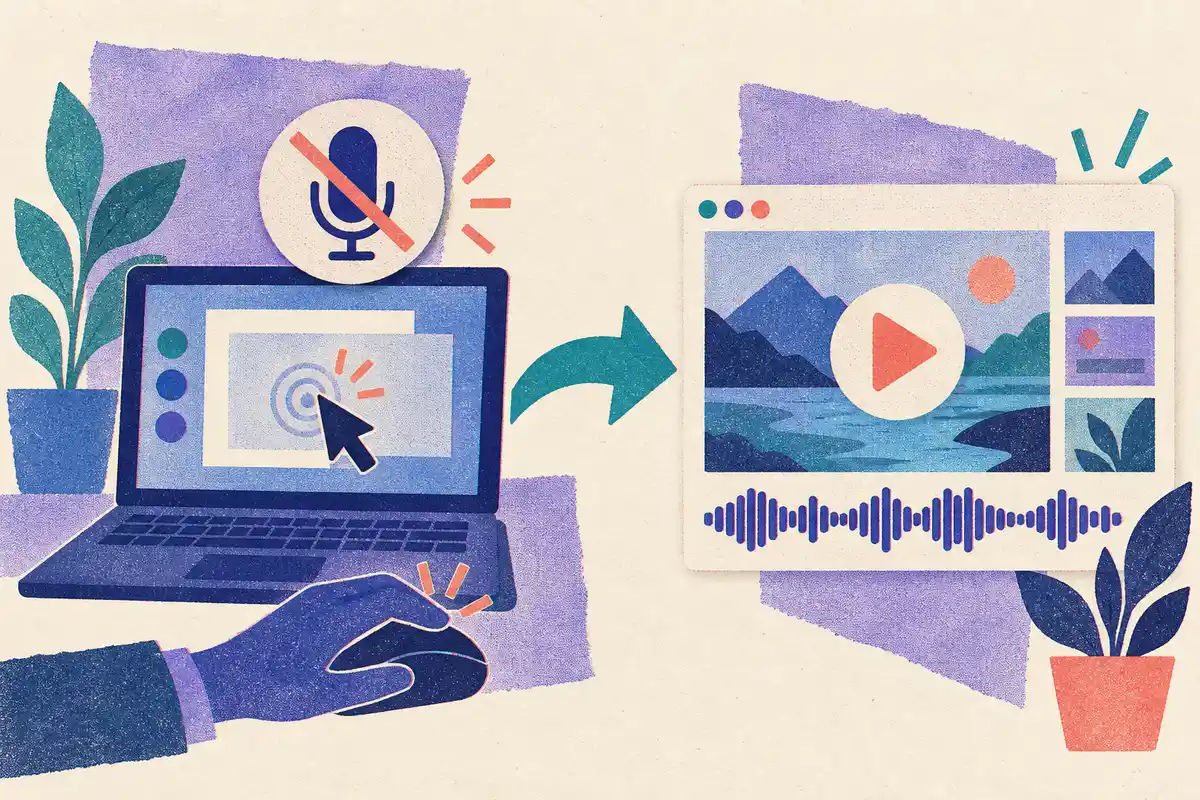
Vorec is built for that case. Record your screen in silence, and the AI detects every click, writes narration matched to what happens on screen, and generates the voiceover. Freeze-sync holds the frame when an explanation needs more time than the recording gives it, so narration never runs ahead of the action. The same recording also produces a written help article, and narration regenerates into other languages without re-recording.
Plans start at $9/month with a free 200-credit trial (trial exports carry a watermark). It does not replace Camtasia's timeline or its quizzing — it offers a focused recording-to-narration workflow.
Bottom Line
Camtasia in 2026 is the same good tool it always was, sold differently. If you make screen tutorials regularly and need zoom, callouts and quizzing, $179.88/yr for Essentials is fair for what it does.
If you are asking because the renewal arrived and the perpetual licence did not, that is a legitimate reason to re-open the decision — just make sure you are re-opening the right one. The question is not only "which editor," but whether you should be editing at all.
Related reading: Camtasia alternative with AI narration and our training video software guide.
Stalled at the voiceover, not the editing? Upload a silent screen recording to Vorec and get a narrated tutorial plus a written guide. Start free with 200 credits.
Other prices checked 12 September 2026: Clueso plans and Descript plans.